Airport welcome and private transfer
Hotel check-in with guide assistance
First dinner — roast duck, zhajiang noodles, tanghulu
CLASSIC CHINA ROUTE · 21 days
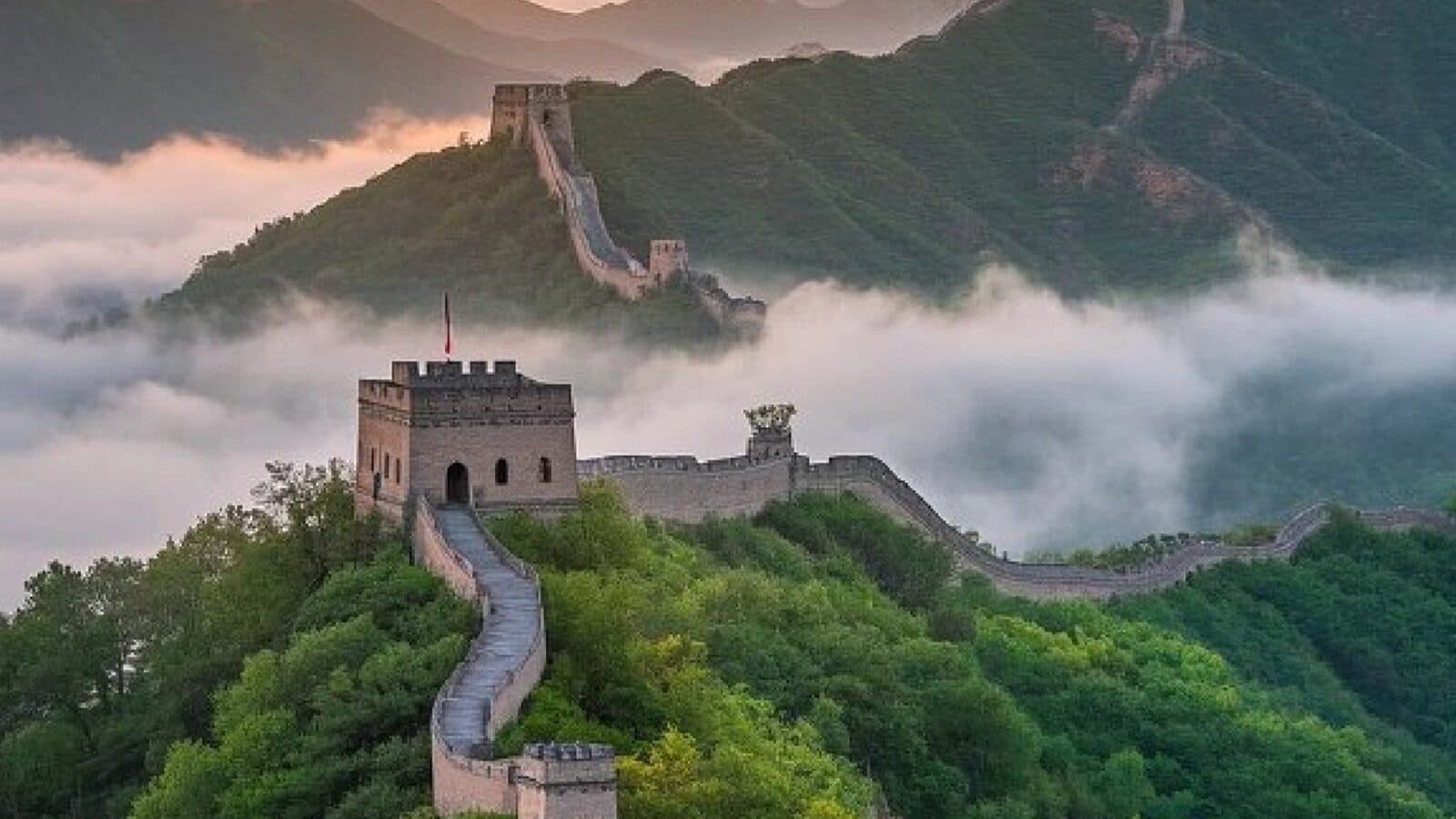
From the Great Wall to the Li River and the Bund — history, sandstone, hotpot, highland lakes and karst in one direction.
Schematic, connected in stop order.
8 Chapters
Every chapter and every day stays visible. Open one day for its order, approved images and route notes.
One day opens at a time.
Wall, palace and hutongs — the historical weight the whole arc plays against.
Airport welcome and private transfer
Hotel check-in with guide assistance
First dinner — roast duck, zhajiang noodles, tanghulu
Badaling is the best-preserved and most representative section of the Ming wall — on the World Heritage list since 1987 — and the ridge views run uninterrupted in both directions from the towers.
Descend for lunch outside the densest strip and rest in the city; the evening segment is walking-light.
The Bird's Nest — host stadium for both the 2008 and 2022 Games — is outlined in warm light, and the Water Cube glows through its bubble membrane cladding, shifting blue.
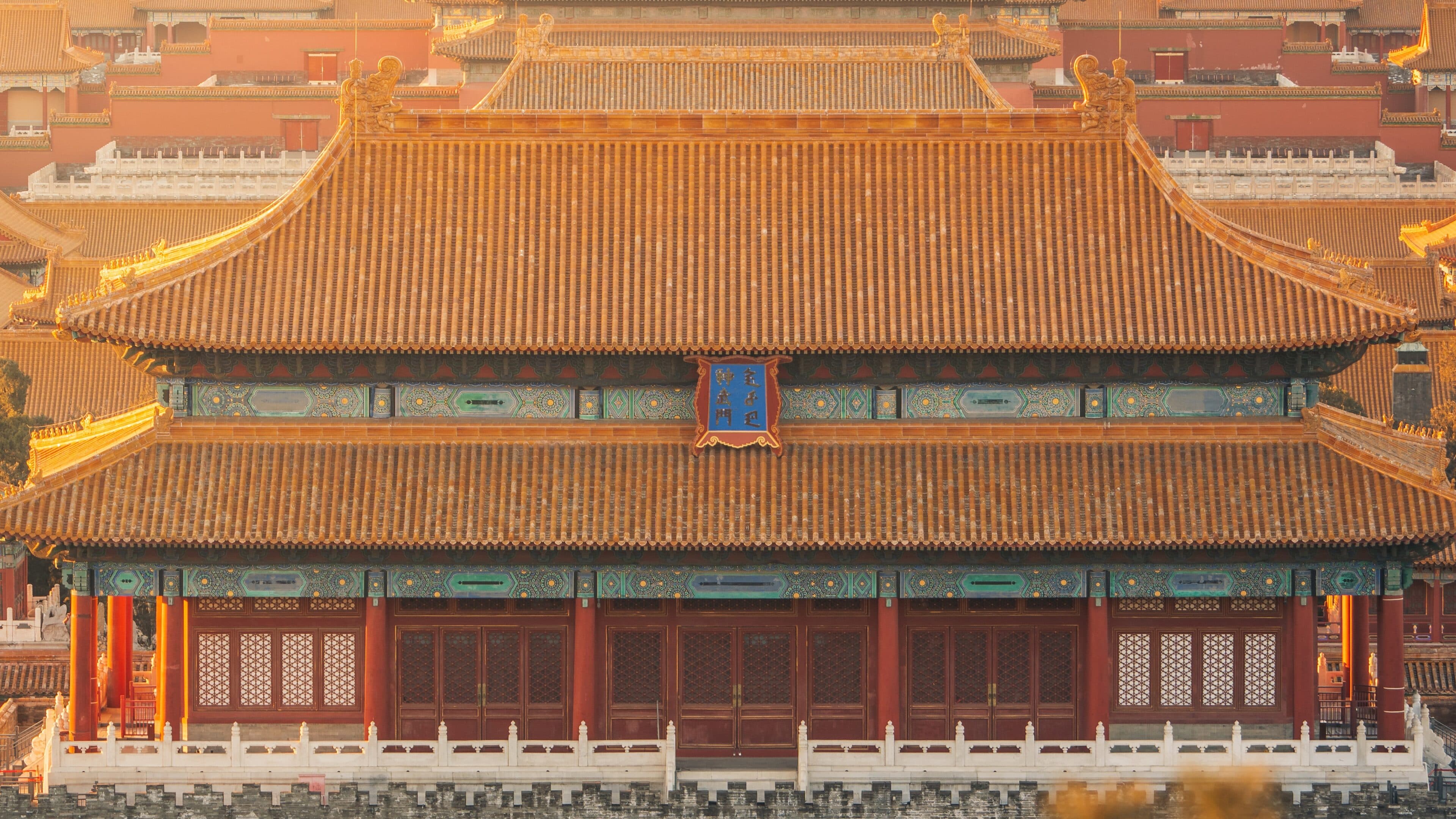
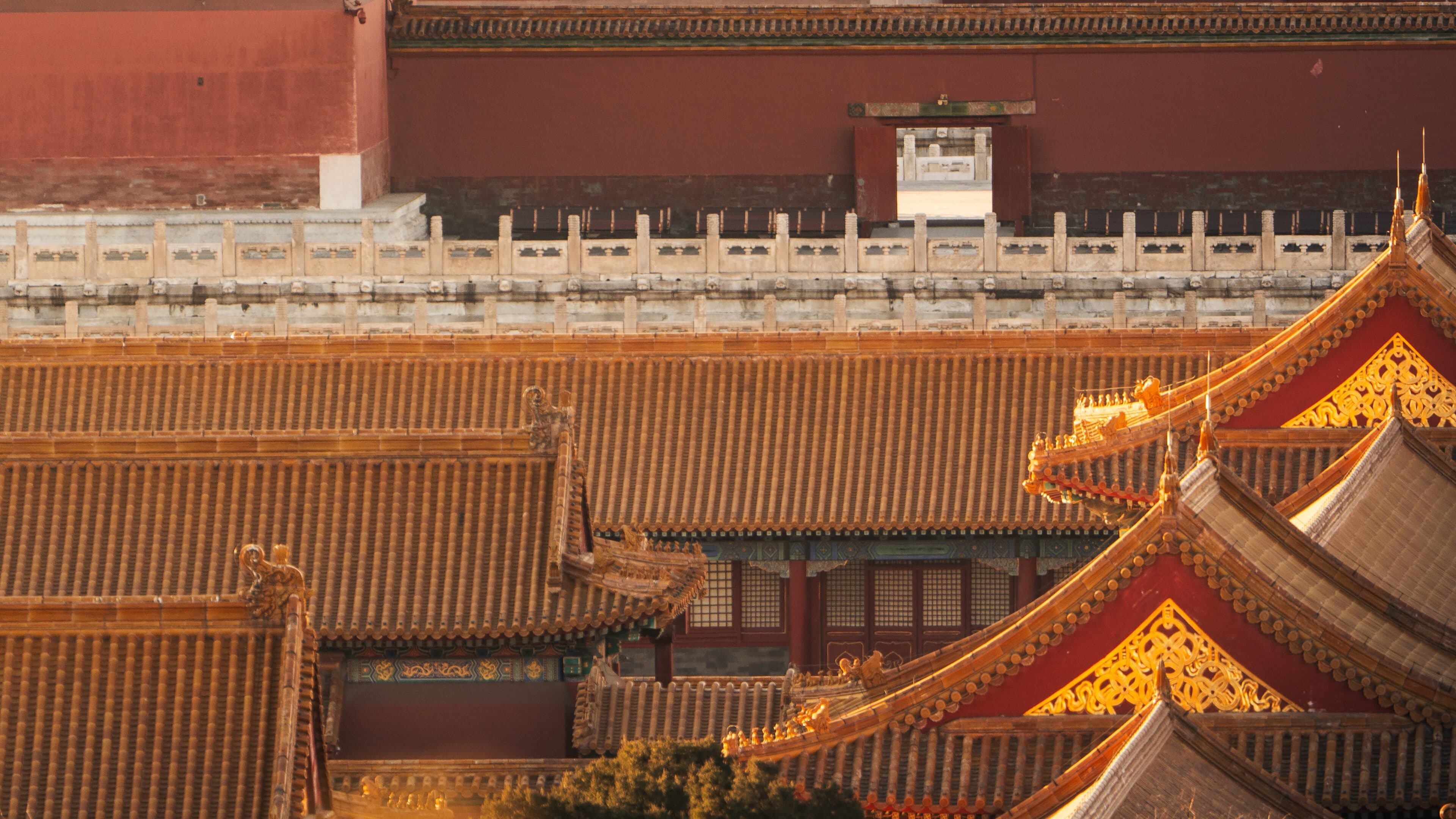
The palace museum holds over a million artifacts and the courtyards run along a strict central axis — outer courts for state, inner courts for residence. The route keeps to the spine so the scale registers.
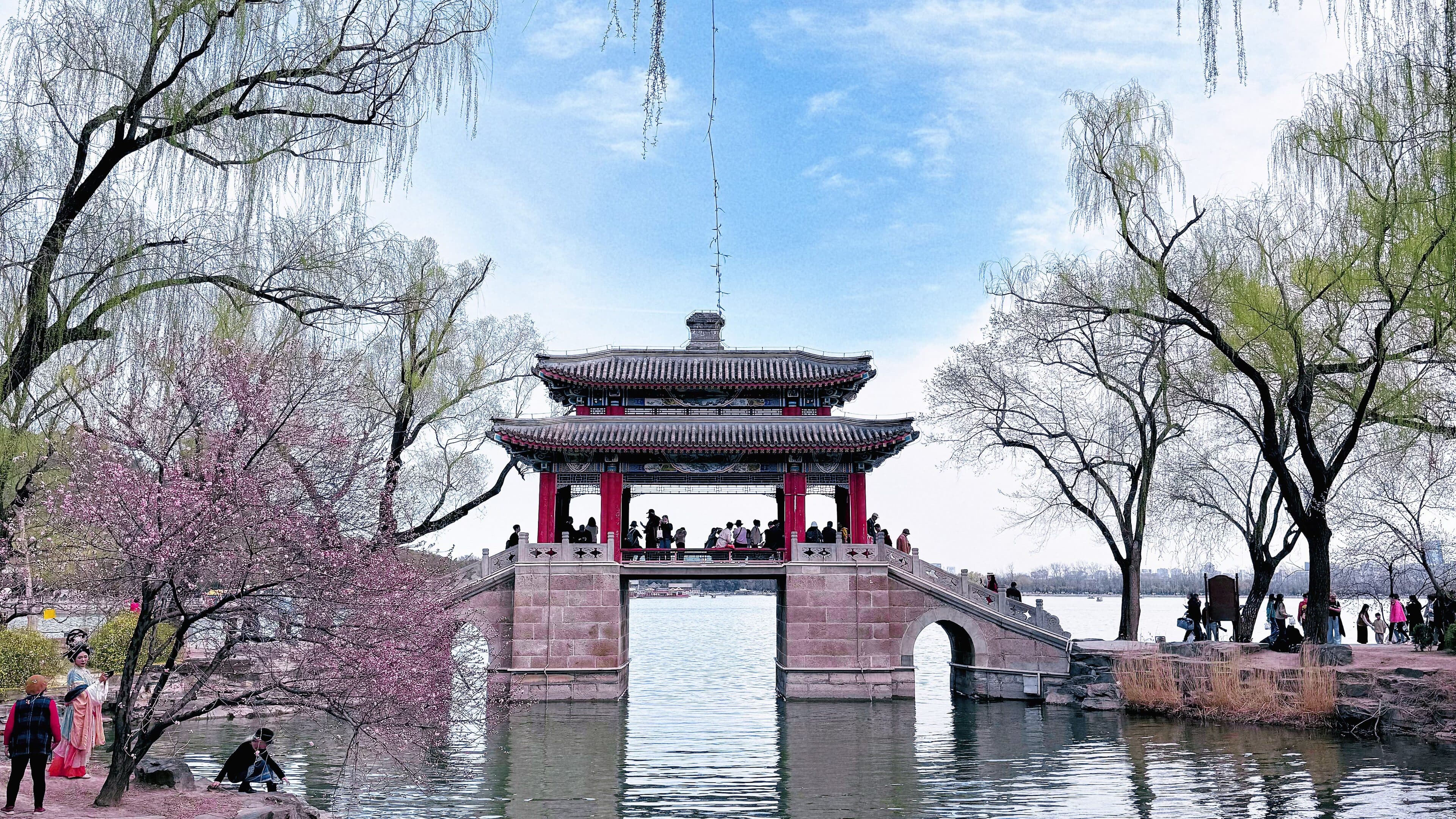
Shichahai's lake views ('silver ingot bridge watching the hills') and the hutongs behind them predate the tourist shops; Qianmen then gives the city's rebuilt commercial face.
Dinner near the hotel; the four-hour rail leg tomorrow favors an early night.
Terracotta ranks, Tang baths and a free evening of wall, noodles and lantern light.
Beijing–Xi'an high-speed rail (about 4 hours)
Station pickup and check-in
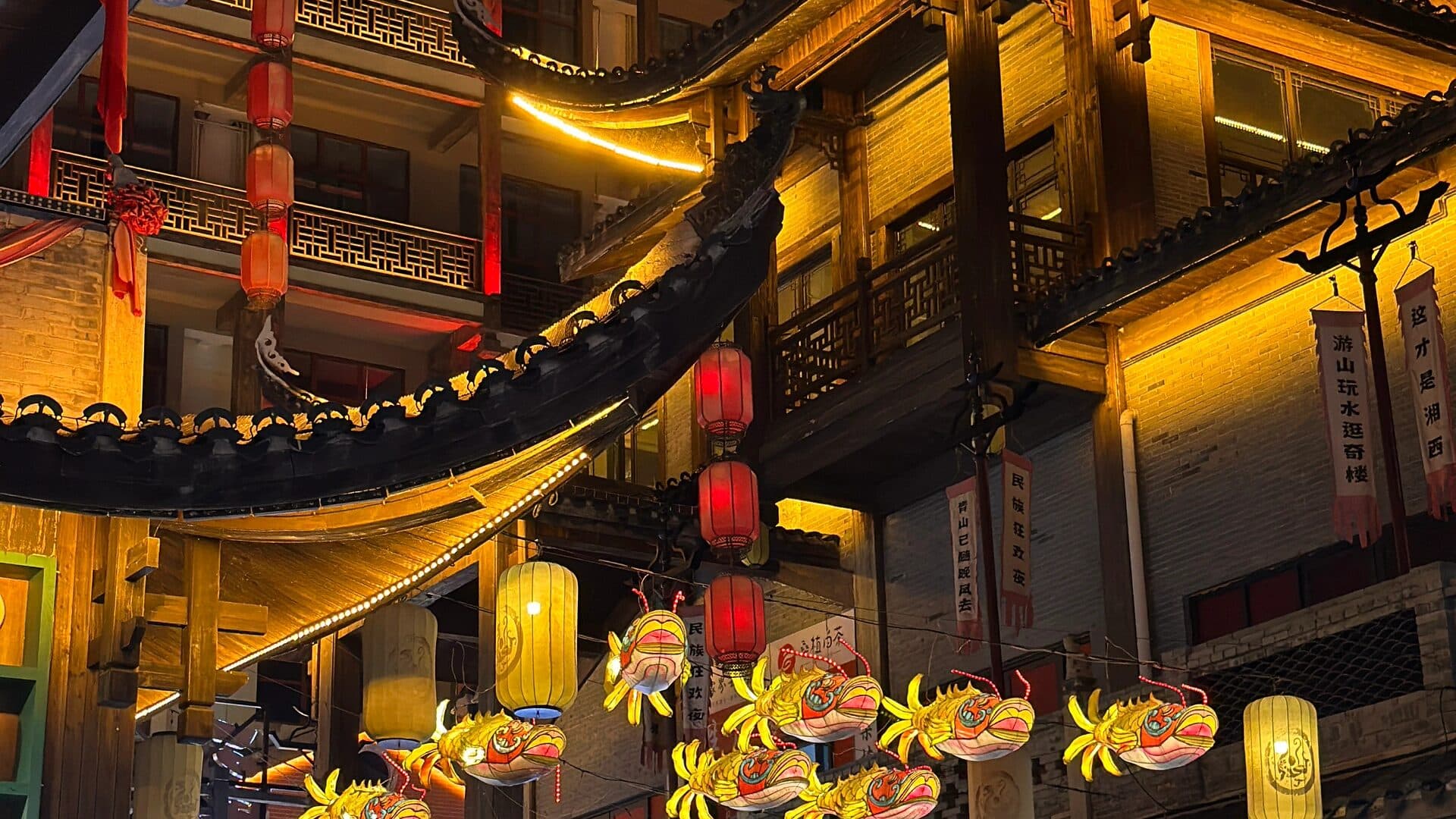
Free evening: wall cycling, Muslim Quarter, tower views
Food: roujiamo, mutton paomo, zenggao
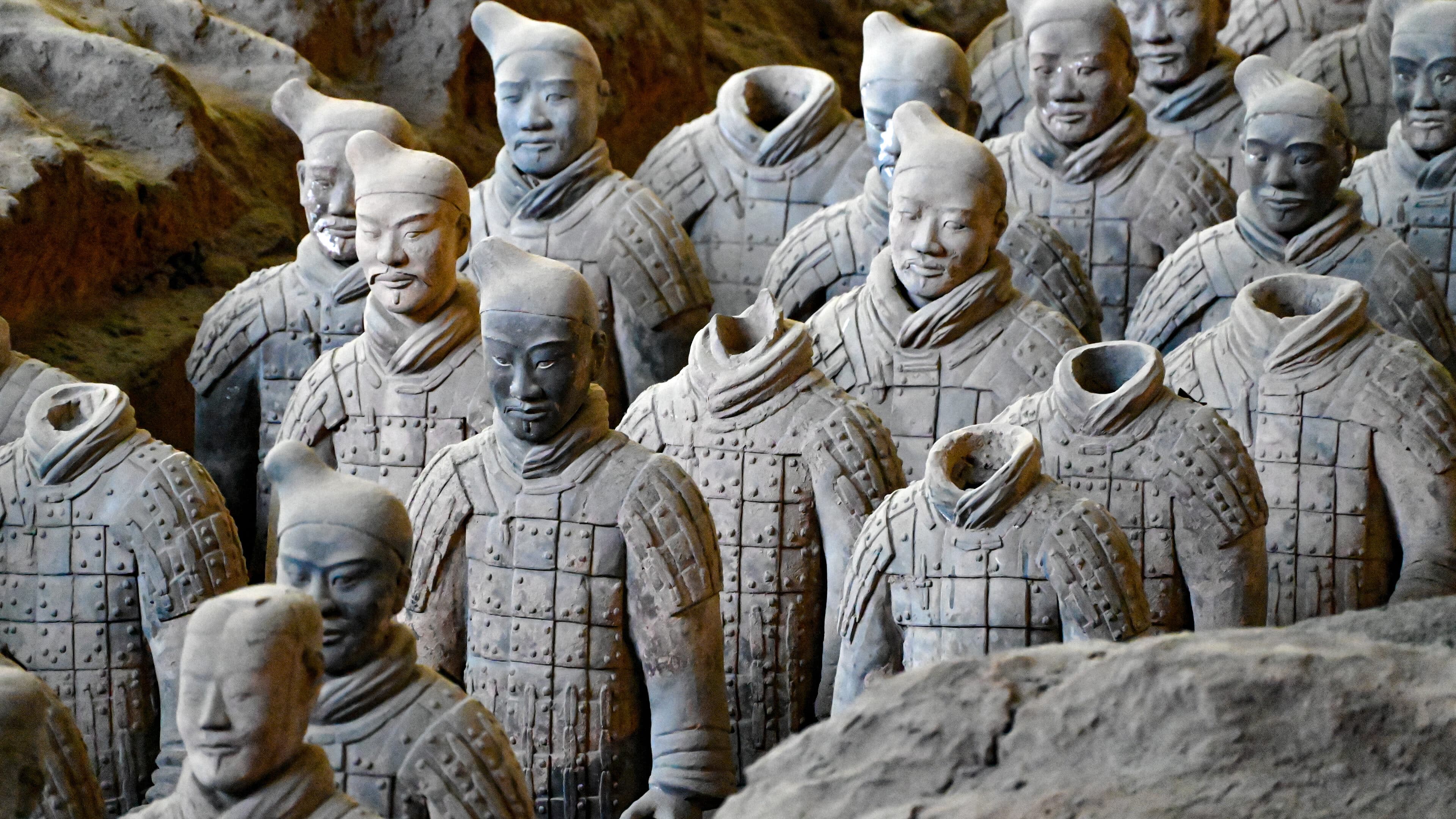
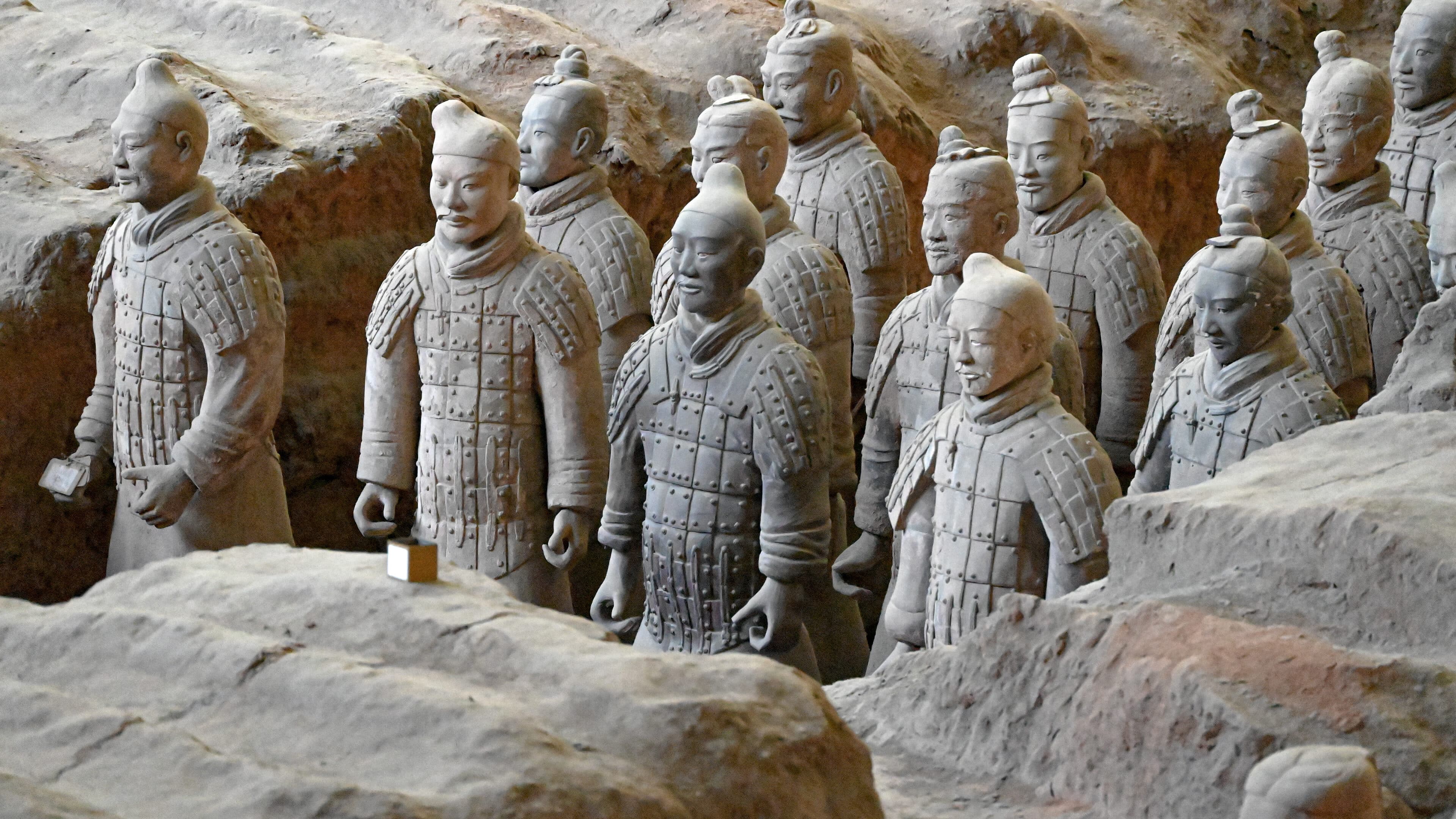
The warriors were assembled as a full army — infantry, archers, chariots — and each face is individual; the pits show both the formation and the ongoing reconstruction.
Huaqing Pool layers the Tang imperial baths, lake gardens, and the five halls where the 1936 Xi'an Incident was negotiated, plus a short 6D film inside the complex.
Back in Xi'an for dinner — the Muslim Quarter's grills and breads, or a quieter table near the hotel.
Wulingyuan's pillar forests, Tianmen's cliff walkways, and the first mountain system of three on this route.
Xi'an–Zhangjiajie flight (about 1.5 hours)
Airport pickup and check-in
Free evening in town
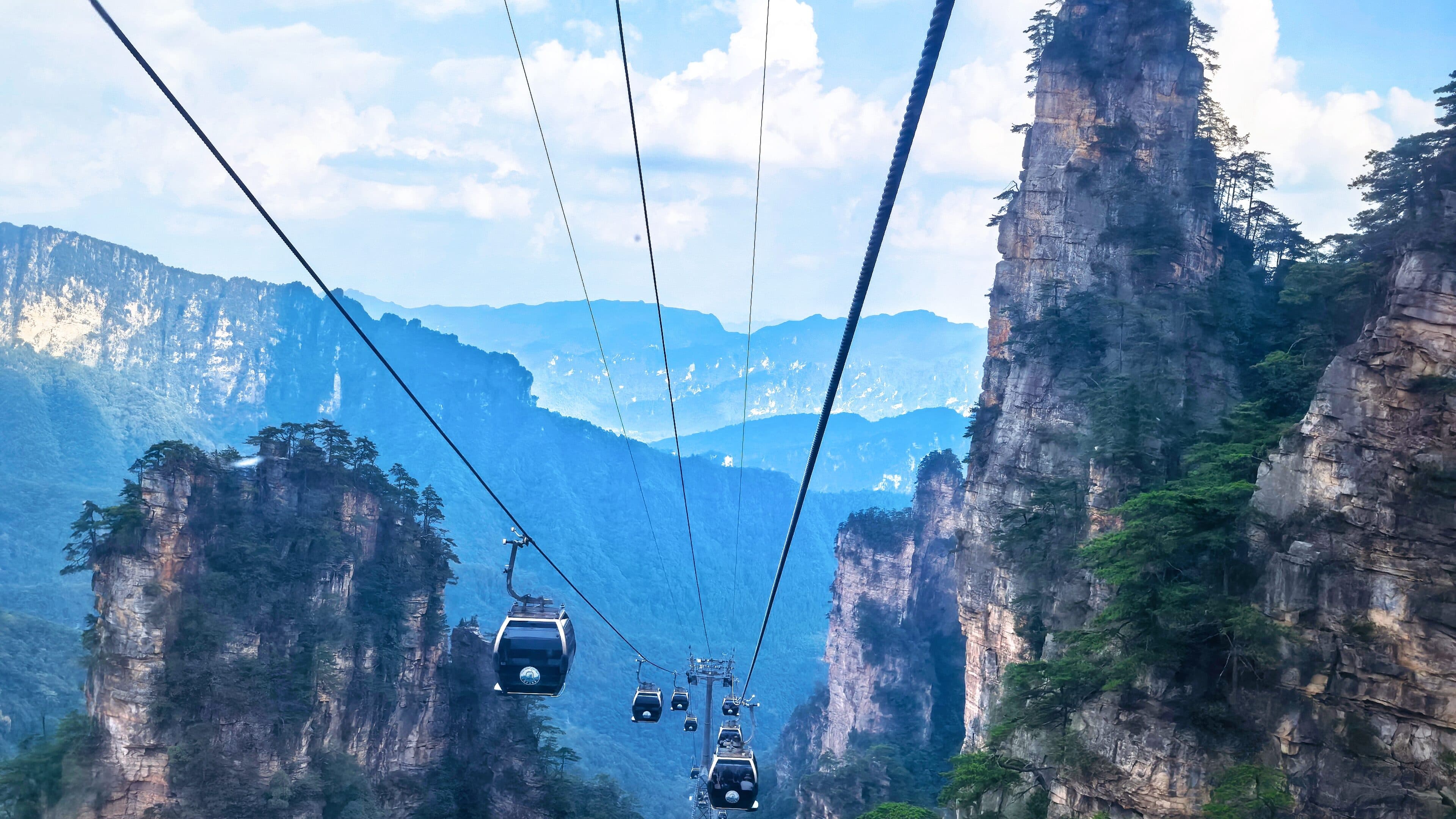
Established in 1982 as China's first national forest park and now a World Heritage and Global Geopark site, the roughly 48-square-kilometer reserve is defined by its quartzite sandstone pillars — thousands of them.
The Tianzi Mountain section opens the wider panorama before its cable car returns you to the valley — no repeated trails.
The indoor theater stages five folk acts — Yao courtship, Tujia bridal farewell, the Maogusi dance, Xiangxi legends and Miao drumming — with an outdoor stunt segment after.
Arrive on day 8's evening for the Hongya Cave lights; day 9 gives you the train-through-building and Ciqikou before the Sichuan leg.
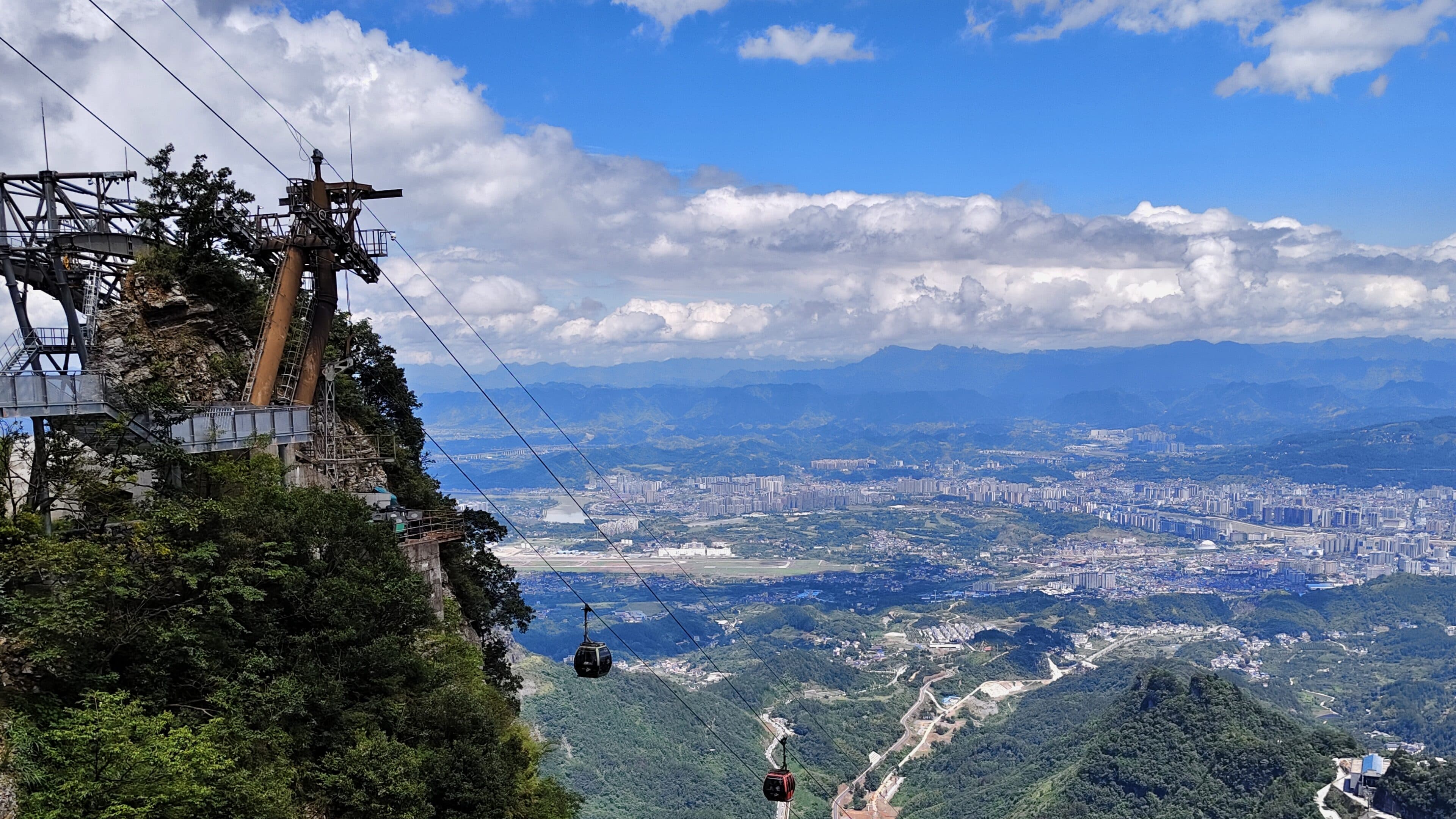
The cable car climbs from the city edge; on top, the route links the cave arch, the summit temple and walkways pinned to the cliff, with the 99 hairpins of the access road visible below.
Descend midday and board the rail leg; the Chongqing station pickup lands you at the hotel by early evening.
Hongya Cave's stacked stilt houses light up as one block above the river — busy, but worth the first-night walk.
Liziba is exactly what it sounds like — the monorail line enters one end of a residential building and exits the other; viewing platforms handle the crowds. Ciqikou afterward is a Ming-Qing river town of stone lanes and snack stalls.
Board the Chengdu rail early enough to arrive before dark; station pickup and check-in close the day.
Chengdu's first dinner sets the Sichuan chapter going — hotpot, skewers or rabbit, by spice tolerance.
Travertine terraces and 114 blue lakes up high, then down to the basin for pandas, a teahouse and face-changing opera.
Huanglong's valley holds more than 3,400 travertine pools stacked in terraces down the gorge — the largest and best-preserved highland travertine landscape of its kind, and a World Heritage site.
Walk the valley top-down from Wanglongping past Huanglong Temple to the Five-Color Pools at the head of the terraces, then descend on foot to the gate and transfer by car to the Jiuzhaigou park gate hotel.
Overnight at the Jiuzhaigou gate town — early night for the park's first shuttle.
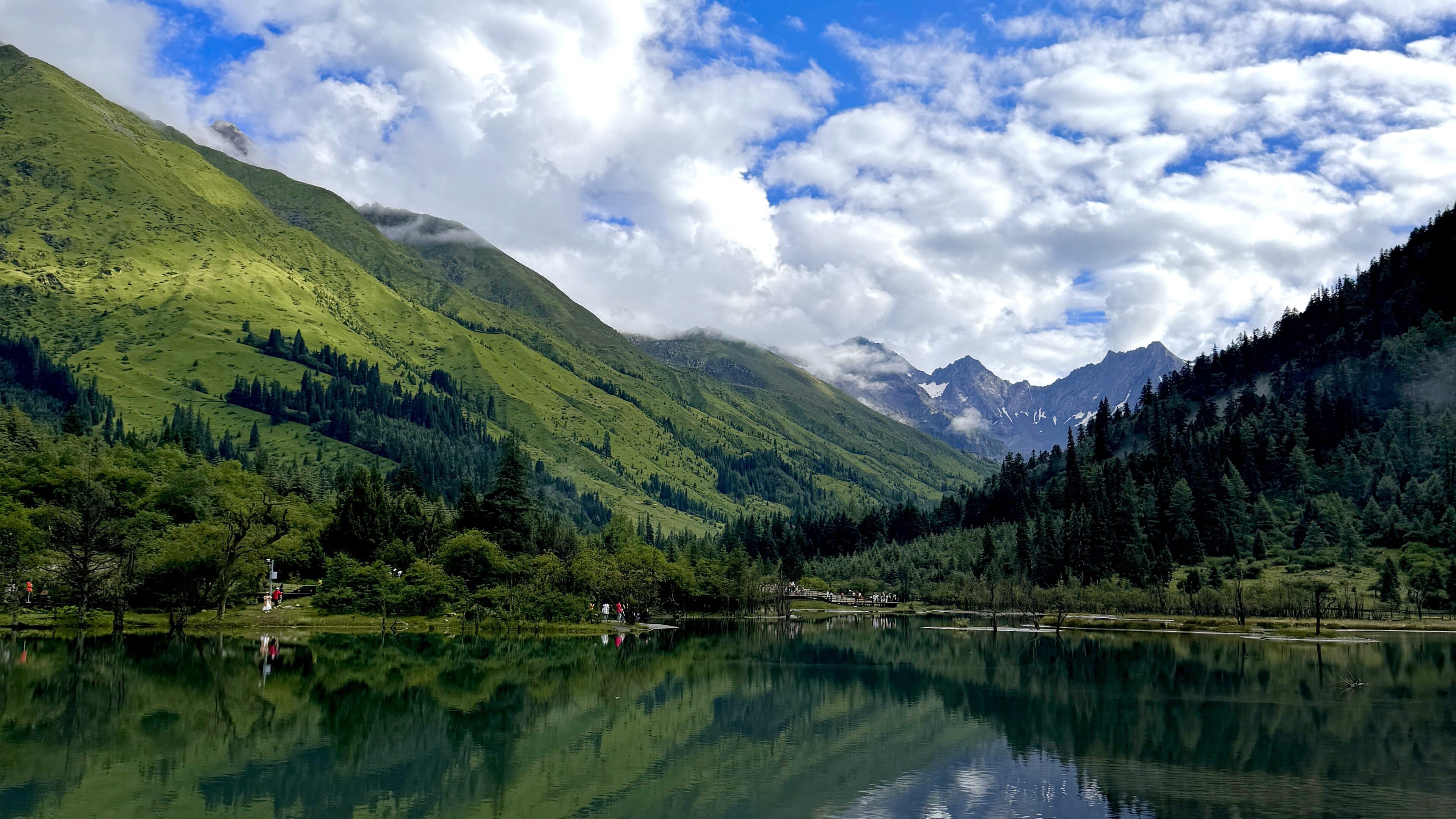
The park is a Y of three valleys holding 114 lakes, 17 waterfall groups and forest cover above 80 percent; the top-down route through Rize valley is the standard efficient line.
Cross to Zechawa valley for Long Lake — the park's largest — and the small, intensely colored Five-Color Pond, finishing at Nuorilang's 270-meter-wide curtain before exiting.
Back to the gate hotel to rest; the day is high-altitude walking even with the shuttles.
The morning rail leg returns you to the basin; lunch in town before the panda base's better afternoon hours.
The breeding base is laid out as lakes, streams, bamboo groves and lawn enclosures; the nurseries and viewing villas get you close to feeding, rolling and tree-climbing pandas.
A Chengdu institution: a bowl of tea in an old teahouse while the opera's face-changing performers swap masks faster than the eye tracks.
Four days that give the route its breathing room: Naxi mountain culture, Lijiang's lanes, Dali's grid and a full day around Erhai.
Chengdu–Lijiang flight (about 1.5 hours)
Airport pickup and check-in
Free afternoon and evening in the old town
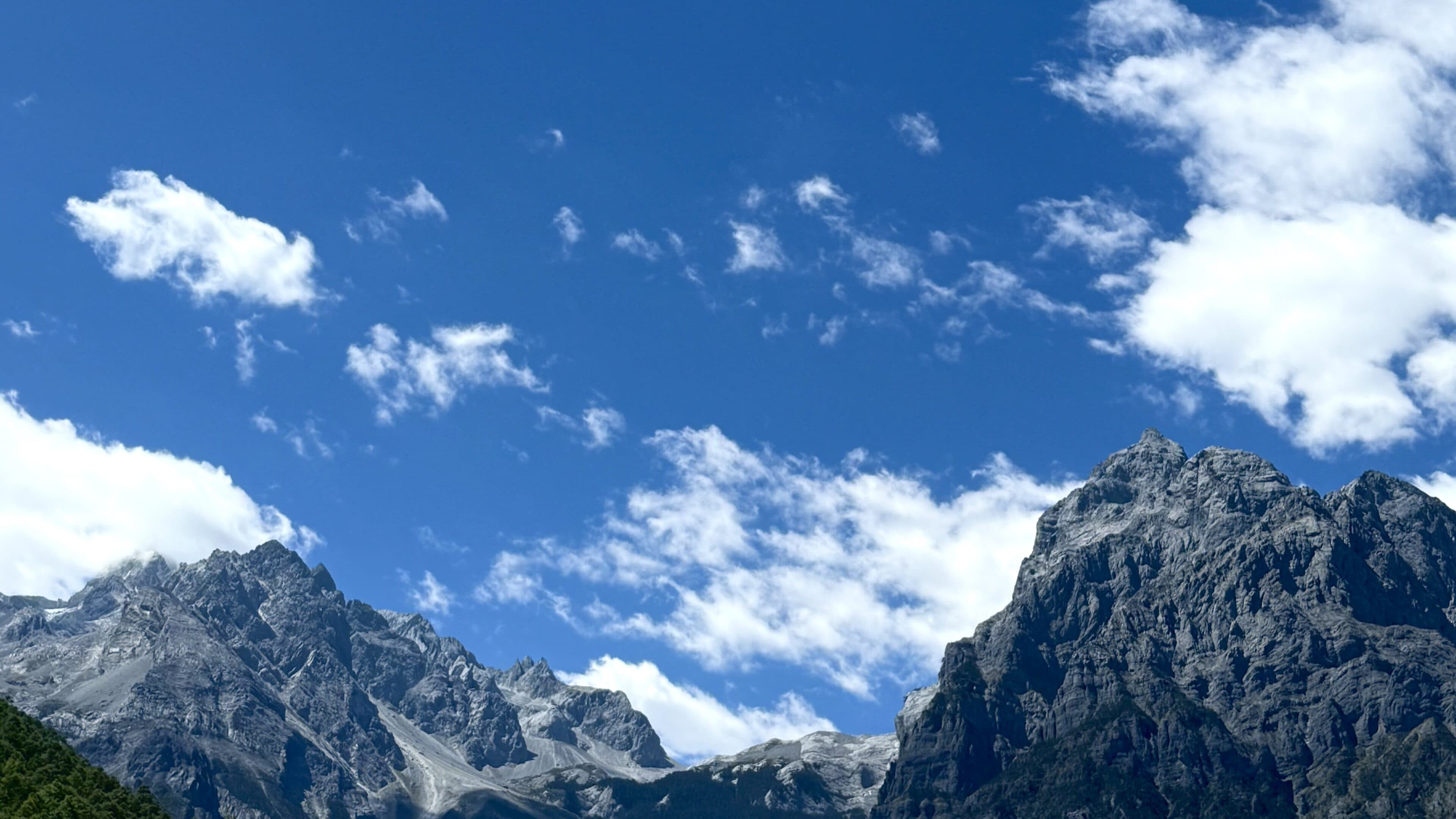
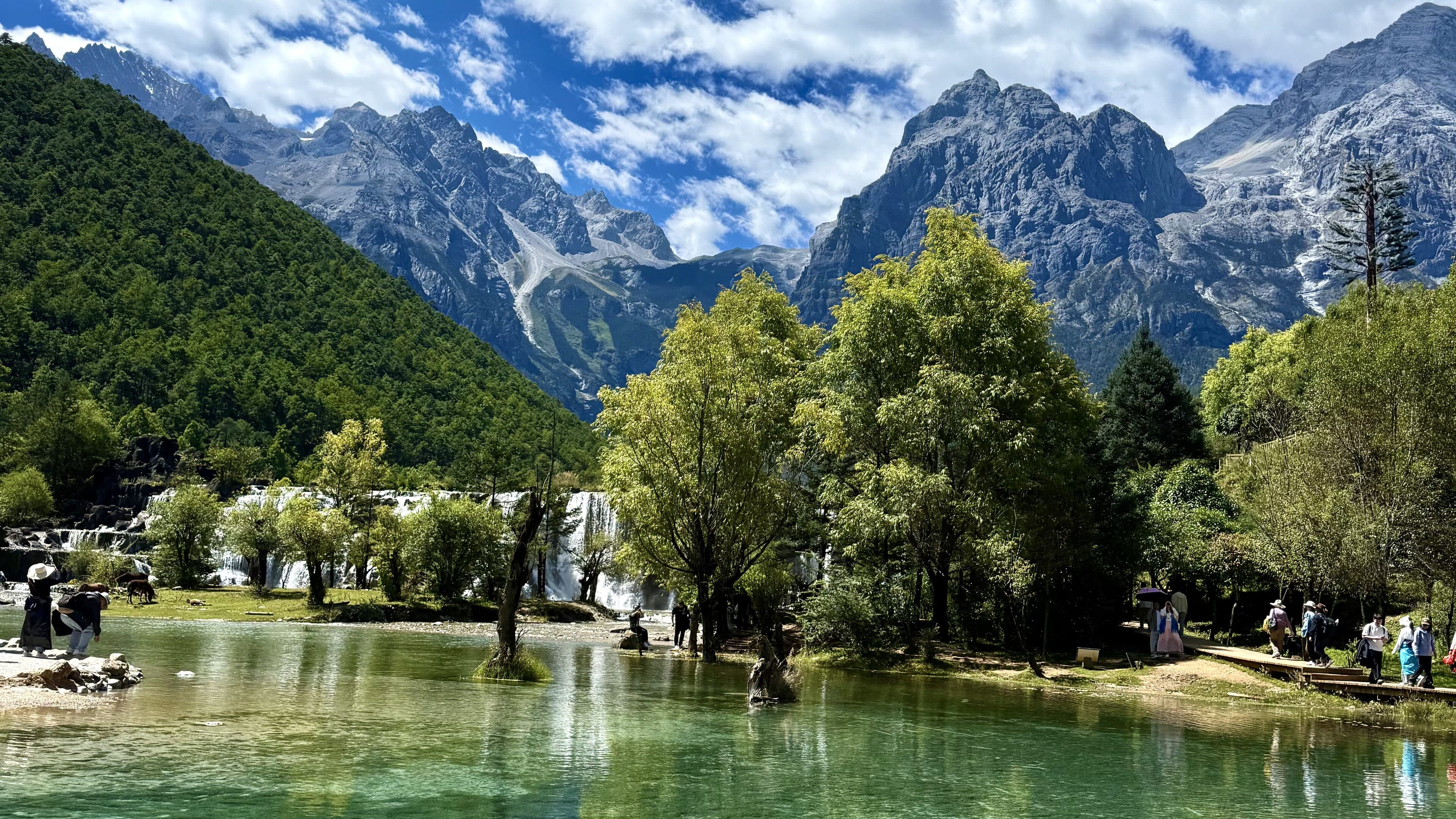
Jade Dragon is the southernmost glacier-covered peak range of its latitude and the holiest mountain in Naxi tradition; the cable car serves the glacier-level boardwalks.
Descend to the meadow and spruce levels — gentler ground under the same summits — before returning to town.
'Lishui Jinsha' stages the region's Naxi and highland cultures as dance tableaux built around water, mountain and love themes.
The drive south drops out of Lijiang's basin into Dali's — Cangshan's nineteen peaks appear on the west side of the road before town.
Dali old town runs a grid of flagstone streets inside its restored walls; the lakeside and market quarters sit a short ride away.
Dinner on the local trio — sour-spicy lake fish, plum-braised pork, pan-fried tofu — before an easy night.
From the water, the Cangshan range and the lakeside villages read as one sweep — the boat gives the lake its scale before you drive it.
The jeep loop stops at the villages, fields and photo points around the lake at your own pace, ending with a barbecue by the water.
Sunset over the lake on the drive back; dinner is the barbecue itself.
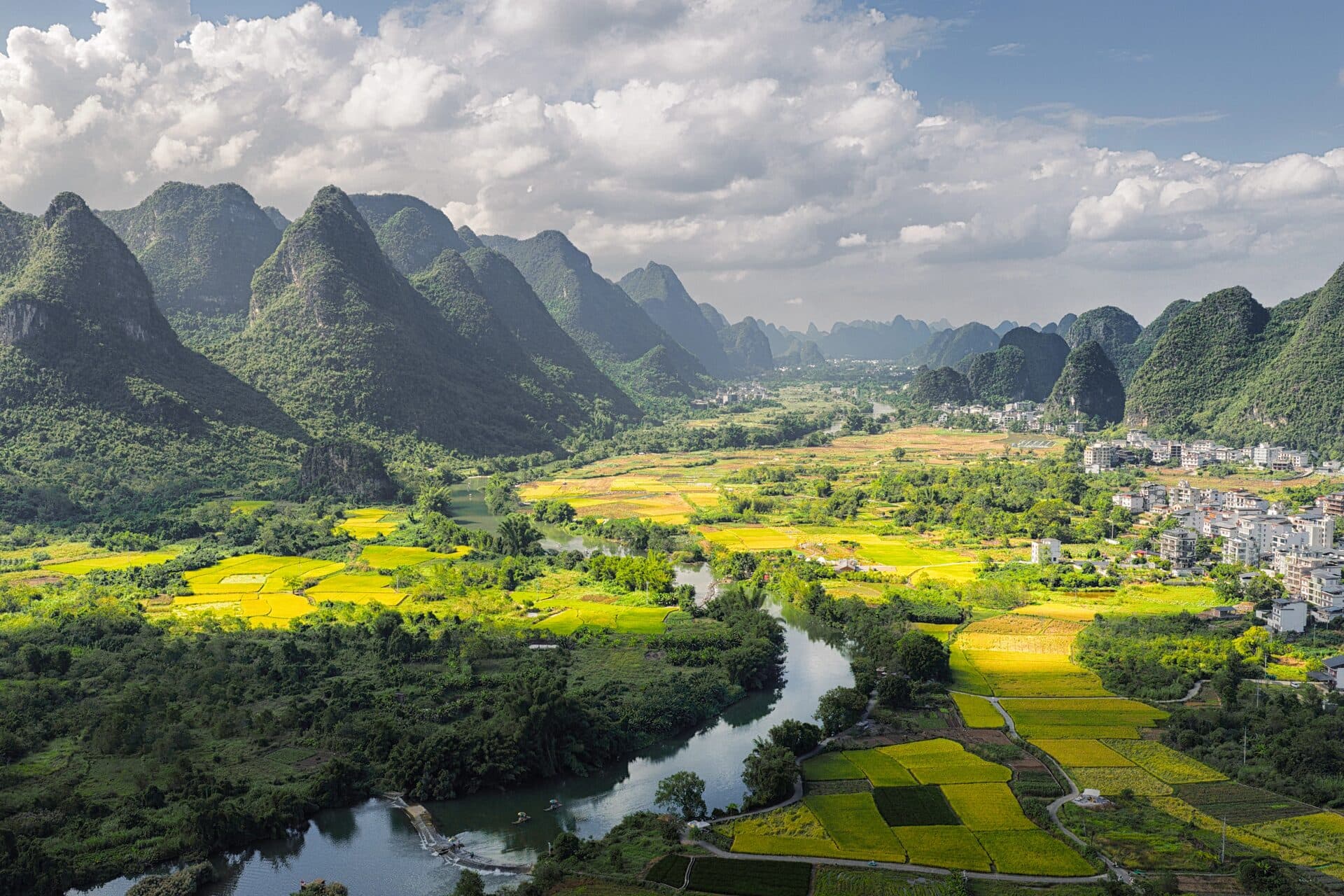
Li River cruise, e-bike lanes between the peaks, a hand-poled raft on the Yulong and a staged karst night show.
Dali–Guilin high-speed rail (about 5 hours)
Station pickup and check-in
Free evening: Two Rivers and Four Lakes, Elephant Trunk Hill
Food: Guilin rice noodles, beer fish, taro pork
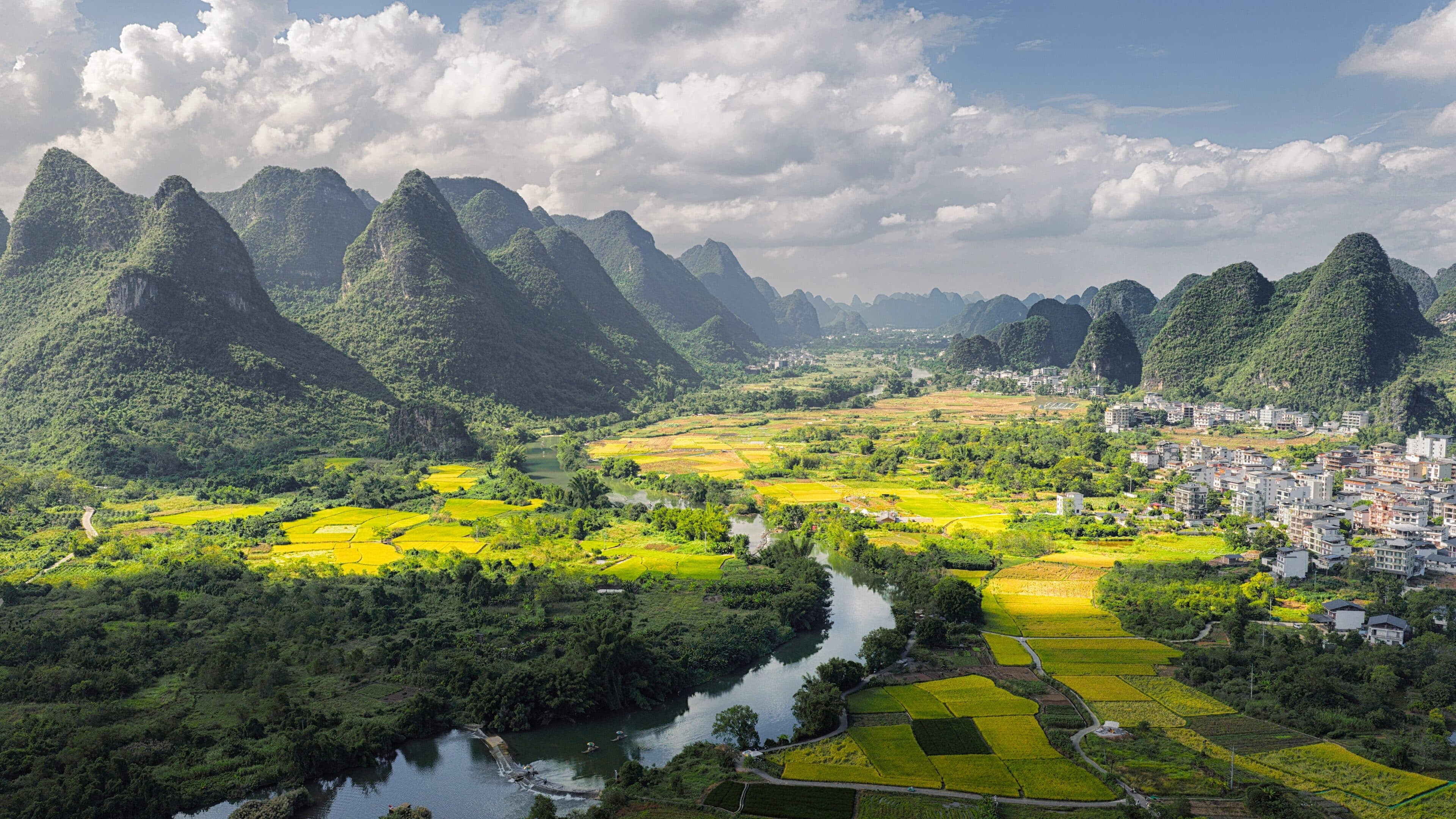
The river runs flat between steep, forested karst towers; from the deck the scenery does the work — no commentary required.
Rent an e-bike and follow the Ten-Mile Gallery road past rice fields, the banyan tree and Moon Hill turnoffs — stop whenever the light is right; the road is flat and quiet.
Yangshuo town for dinner — osmanthus jelly, sticky rice, snail-duck hotpot — and an early night if the raft is booked for tomorrow.
Unlike the big Li River boats, the Yulong rafts are hand-poled and small; the river slides over stone weirs past paddies and bamboo — mostly the sound of water and birds.
The 90-minute drive back to Guilin lands mid-afternoon, leaving time for a lakeside walk or rest before dinner and the show.
'Shanshui Jian', created with a director team from the Beijing Olympics closing ceremony, runs four chapters — green hills, waters, caves and stones — mixing karst imagery, Zhuang and Yao folk elements and acrobatics.
Ming garden to megacity in the final forty-eight hours, ending with the Bund's coordinated light-up.
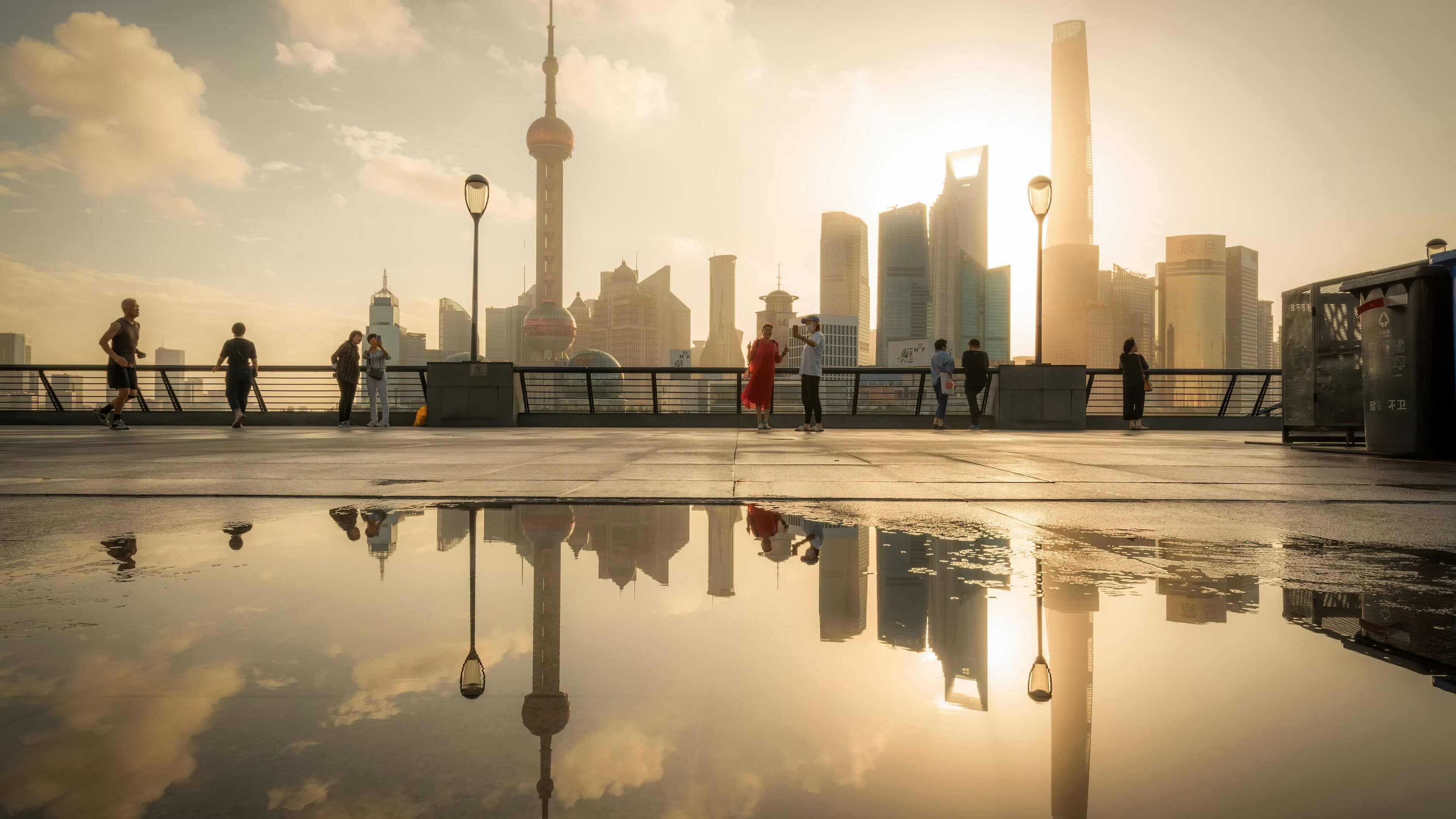
Landed and lunching by noon: Yu Garden dates to 1559 — a Ming official's compact garden of stacked rockery, pools and pavilions arranged 'small within big' — with the City God temple snack alleys on its doorstep.
The public ferry is the local way across the Huangpu; from the Pudong side take in the tower cluster — Oriental Pearl among them — before recrossing at dusk.
The Bund's buildings switch on together at 19:00 (light shows run Friday to Sunday); walking north to the Waibaidu Bridge frames the old iron against the new skyline.
Free morning in Shanghai
Airport transfer matched to the flight
PRACTICAL
The Sichuan chapter sits high — the Huanglong–Jiuzhaigou area spans roughly 1,700–5,588 m; pace the walks and hydrate. Jiuzhaigou works top-down with the shuttles; the advisor sequences the valleys around crowd timing. Summer afternoons bring rain to Yunnan and Guangxi — boat and raft segments all have weather alternates. Twenty-one days of rail and flights rewards light luggage and a laundry plan; hotel buffers are built in.
Altitude-sensitive travelers can flatten the Sichuan chapter into Chengdu city days and rejoin in Yunnan. Add Fenghuang old town between Zhangjiajie and Chongqing for one more river-town night. Cut one region (usually Sichuan or Yunnan) to make this a 17–18 day route without breaking the arc.
A HUMAN NEXT STEP
Three weeks is a big canvas. Tell us the regions you care about most, your food limits and how much altitude you welcome — the advisor keeps the one-way spine and rebuilds the chapters.
THE SAME TIME CHAPTER
Same length band, each one a full cross-province route of its own. Open one to read it day by day.